Phu Quoc Travel Basics: Flights, Visas, Immigration, Currency & eSIM (2026)
Before any resort, any beach, any cable car — there’s the airport. I’ve lived on Phu Quoc for six years and watched a lot of first-time visitors land here, and the same few things trip people up every time: which flights actually go direct, whether you need a visa, how to avoid a long immigration line, and what to do about cash and data the second you land.
This guide is only that — the stuff that makes day one go smoothly. Weather and packing, getting around once you’re here, and choosing which part of the island to stay in each get their own guide, because they deserve more space than a basics post can give them.

The Quick Facts
| Item | Details |
|---|---|
| Currency | Vietnamese dong (VND) |
| Time zone | Indochina Time (ICT, UTC+7) |
| Power | 220V, type A/C sockets — check your plug type and bring an adapter if needed |
| Visa | Depends on your passport — see the table below |
| Trip style | Closer to 70% resort time, 30% sightseeing |
Visa: Check This by Nationality
Vietnam’s visa-free allowance depends entirely on your passport.
| Nationality | Entry requirement |
|---|---|
| South Korea, Japan, UK and similar | Visa-free for 45 days (some allow multiple entries) |
| Most of Western Europe (France, Germany, Italy, Spain, Netherlands, Denmark, Sweden, Finland, etc.) | Visa-free for 45 days |
| United States, Canada, Australia | Not visa-exempt — apply for an e-visa before you travel (up to 90 days) |
| Everyone else | Varies by country — check your government’s travel advisory or the Vietnamese embassy |
Visa-free policies change fairly often, so confirm the current rule on your government’s or the Vietnamese embassy’s official page before booking.
Flights
Phu Quoc International Airport (PQC) has a decent spread of direct routes. Direct flights currently run from Seoul and Busan (South Korea), Bangkok, Singapore, Kuala Lumpur, Hong Kong and Taipei. If you’re coming from outside those cities — North America or Europe, for instance — the realistic route is a connection through Ho Chi Minh City (SGN) or Hanoi (HAN), then a short domestic hop to Phu Quoc on Vietnam Airlines, VietJet or Bamboo Airways. That domestic leg runs about 1 to 1.5 hours.
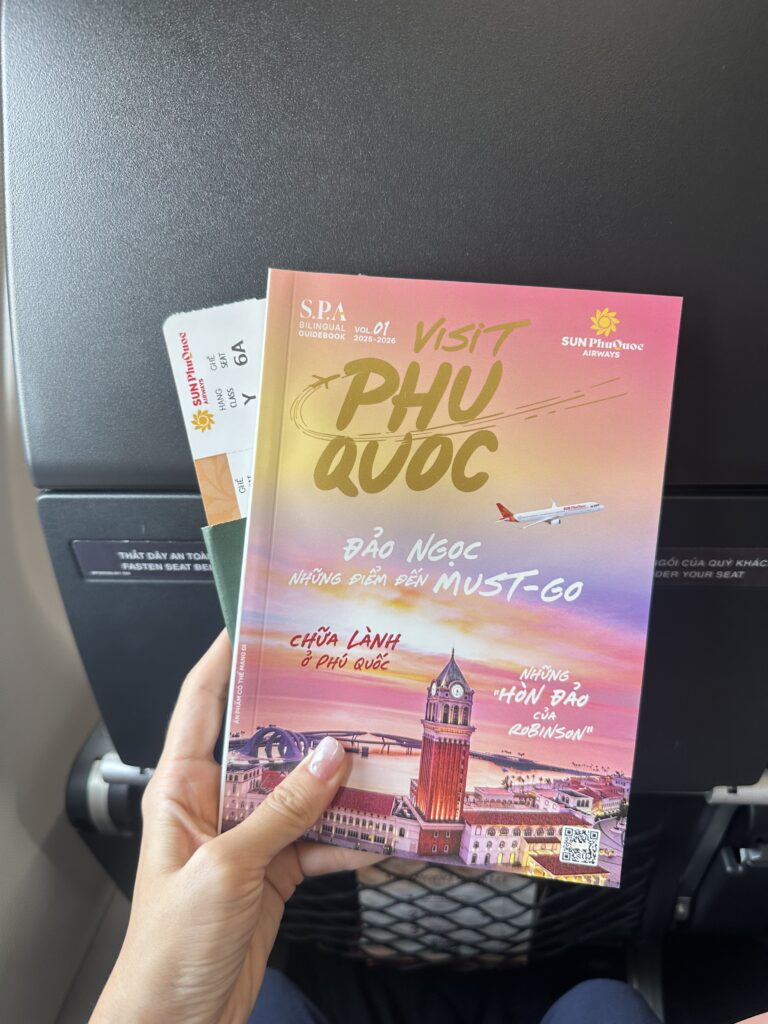
Whichever route you’re on, don’t just compare ticket prices — check the baggage policy too, or you can lose the savings at check-in.
- Budget carriers: VietJet and similar low-cost airlines cover a lot of these direct routes. The base fare is cheap, but checked baggage is usually extra (expect somewhere in the $20s for 20kg), so this tier favors light packers.
- Mid-tier and full-service carriers: Some include 15-23kg of checked baggage in the base fare, occasionally with a meal too. Compare the full cost — baggage and meals included — rather than the sticker price alone.
Prices swing a lot by season, so search your actual dates rather than trust a number here. What you can control is timing: book early, and where possible, avoid landing during the pre-dawn and late-evening rush (more on why below).
🔄 A bigger airport and a lot more resorts are coming. Phu Quoc International Airport is in the middle of a major expansion ahead of hosting APEC 2027 — a second runway, a new terminal opening in July 2027, and capacity for up to 20 million passengers a year. Singapore’s Changi Airports International is consulting on the project, and it’s being designed to handle long-haul flights from Europe and North America, so expect direct routes beyond the current list within a few years.
Hotel supply is expanding just as fast. Sun Group is building a roughly 17,400-room “hotel city” near the APEC venue and Sunset Town (the Bai Dat Do area), bringing in brands like Accor, Hilton, Marriott and Lotte. By 2027, the resort options around Sunset Town will look very different from today’s. Worth a fresh check on routes and new openings before you book.
Getting Through Immigration Quickly
Phu Quoc’s airport is small, so the immigration line can back up fast even with just a couple of flights landing at once. I’ve been through it dozens of times over six years — some days it’s five minutes, other days over an hour. Three things actually shorten the wait.
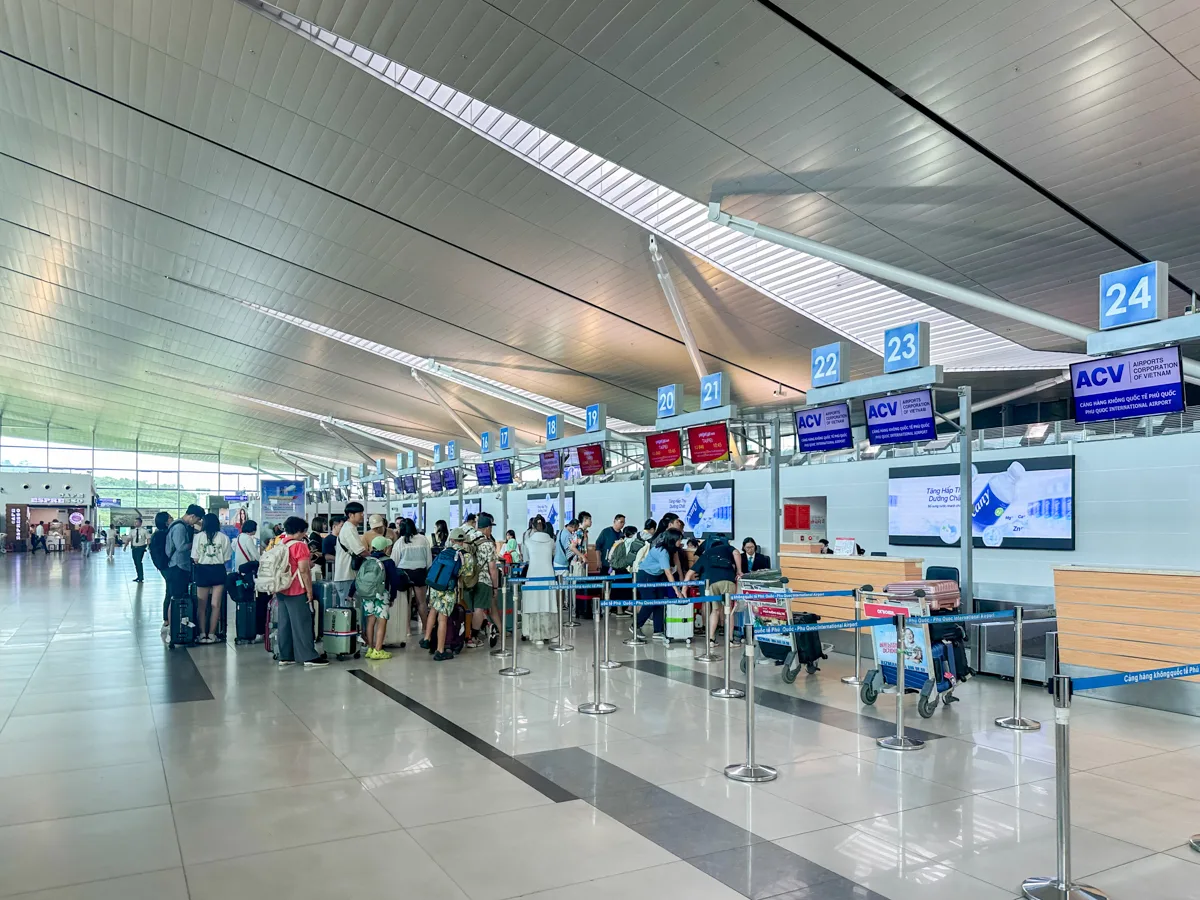
- Pick your arrival window. International flights cluster in the pre-dawn hours (around 5am) and at night (9-11pm), and the line gets long whenever they do. When you book, check whether your arrival overlaps with other international flights, not just the ticket price.
- Book a fast-track service. Reserve one ahead of time and a dedicated staff member meets you at the gate and walks you straight past the line. It runs from about $16.50 per person — worth it in high season or if you’re traveling with kids or older parents.
- Grab an early seat and move fast. A pre-booked seat near the front or online check-in gets you off the plane and into the immigration line first. The catch: if another international flight lands in the same window, its passengers may already be queued no matter how fast you move.
Airport to Your Hotel
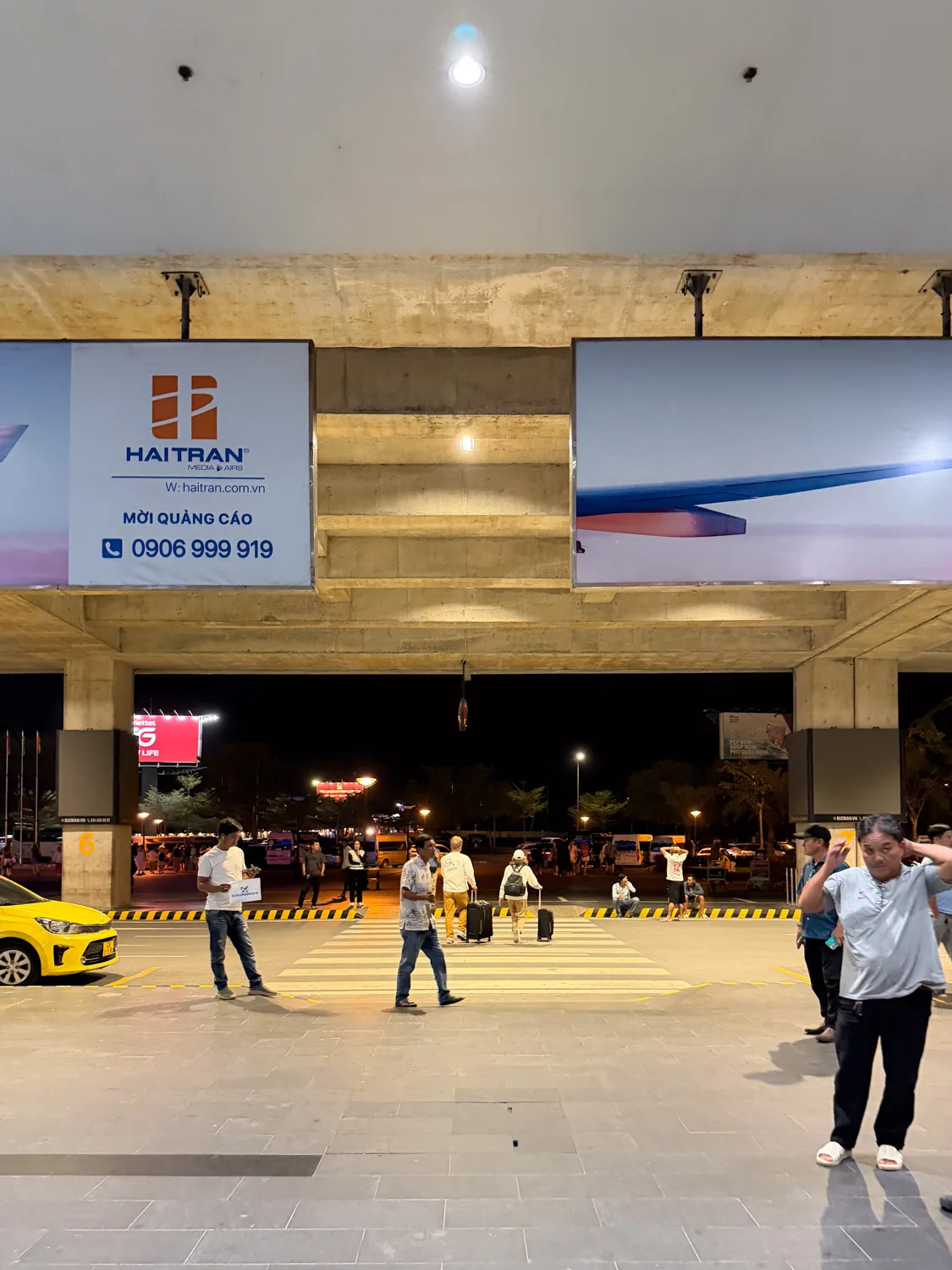
Once you clear immigration, there are four realistic ways to get to your hotel.
- Vin Bus, for central and north Phu Quoc. The stop is about a 3-minute walk from the arrivals exit. Route 17 runs every 15-20 minutes, 24 hours a day (about 70 minutes to central/north); route 19 runs every 2 hours, 8 times a day (about 40 minutes). If you land before dawn, note that route 19’s first bus isn’t until 7:50am, so route 17 is your only option. It’s cheap, around $1.90 a person, though a bit more hassle with heavy luggage or kids.
- Grab, for the south. If you’re headed to Sunset Town, JW Marriott, Premier Residences, New World or other southern resorts, Grab is the easiest option — about 20-25 minutes and roughly $10. Drivers will approach you outside arrivals offering a cheaper ride than Grab; it can be a bit less, but you lose the safety and card-payment guarantees, so app-booking is the safer call on a first visit.
- Hotel pickup. Arrange it when you book and a driver holds a name sign at arrivals. It runs roughly $19-53, and it’s the easiest option if you’re traveling with older parents or young kids.
- Shared shuttle (“morning tour”). A cheaper, shared-ride option if you’re traveling on a tighter budget.
Currency: Three Ways to Get Dong
There are three main ways to get Vietnamese dong (VND) for the trip, and each has real trade-offs.
| Method | Pros | Cons |
|---|---|---|
| Exchange before you fly | Cash in hand before you land; banking apps make it simple | Requires a bank visit; fees eat more into small amounts |
| Local exchange counters/jewelry shops | Rates are usually better than at home; exchange exactly what you need | Have to find a reputable one (scam risk) |
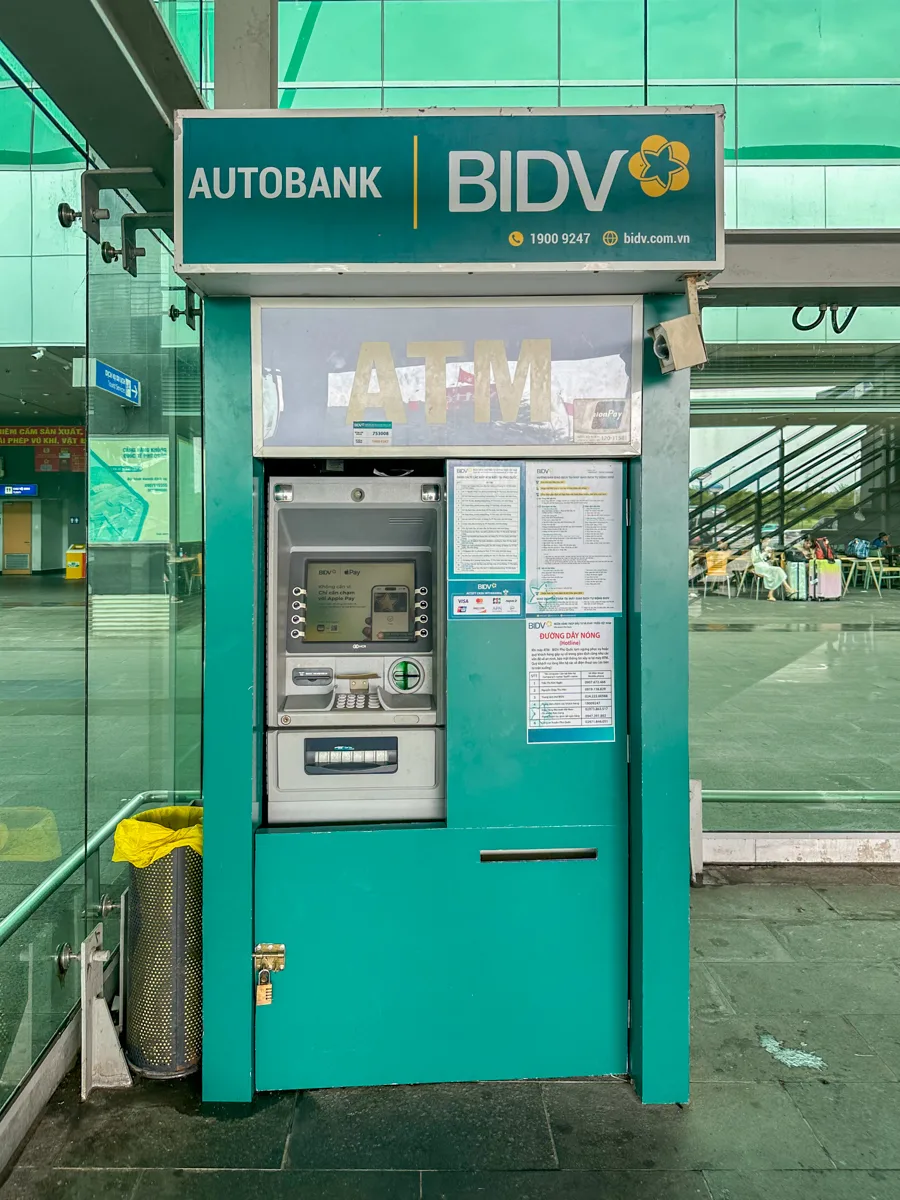
| Travel card + local ATMs | No exchange fee, withdraw exactly what you need, easy to budget | Need to locate ATMs; some charge a withdrawal fee |
The easiest combination is a travel card paired with local ATM withdrawals — low fees, and whatever you don’t spend converts back easily. If you do use a local exchange counter, stick to a known one in Duong Dong town rather than whichever storefront looks convenient.
Skip the SIM Card, Get an eSIM
Picture this: you’re stuck in the immigration line, your data isn’t working, you can’t pull up your hotel voucher, and you can’t reach anyone. I always tell people to buy and activate an eSIM before they fly. The moment you turn off airplane mode, you’ve got a signal — so you can check your next step while you’re still in line, and clearing the airport goes noticeably faster.
Data matters most for calling a Grab. Instead of haggling with a taxi driver at the curb, call a Grab the second you have signal — the price is transparent and payment is automatic.
Related Guides
- Where to Stay in Phu Quoc: 5 Areas Compared
- Best Resorts in North Phu Quoc
- Best Resorts in South Phu Quoc
Disclosure: This post contains affiliate links. I may earn a commission if you book through them, at no extra cost to you.