Daocheng Yading: Everything You Need to Know (Location, Tickets, Altitude & More)
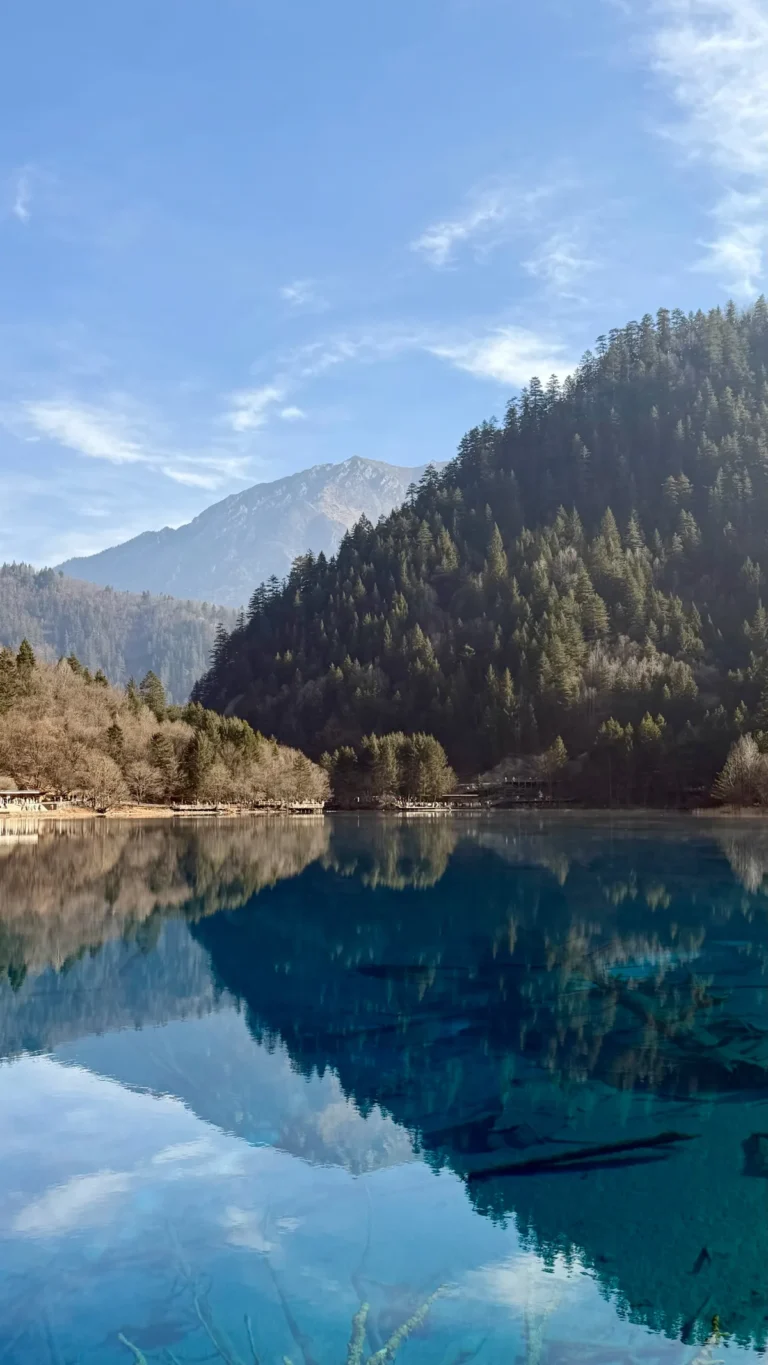
Daocheng Yading is a nature reserve in western Sichuan, China, tucked inside Daocheng County in the Garze Tibetan Autonomous Prefecture. It’s often called “the last Shangri-La” for its combination of three sacred snow peaks, high-altitude grassland, and glacial lakes.
This guide covers the basics — what the place actually is, and what you need to know before you plan anything else. Getting there, trekking routes, and where to stay all get their own dedicated guides, linked at the bottom.
The Three Sacred Mountains
Daocheng Yading is built around three snow-capped peaks arranged in a triangle.
| Mountain | Elevation | Notes |
|---|---|---|
| Xiannairi (Chenrezig) | 6,032m | The tallest of the three, associated with the bodhisattva of compassion |
| Yangmaiyong (Jampayang) | ~6,033m | Framed by Luorong Pasture and dense forest |
| Xianuoduoji (Chanadorje) | 5,958m | Known for its sharp, jagged ridgeline |
Luorong Pasture is the go-to spot for viewing all three peaks together in one frame.
Tickets & Opening Hours
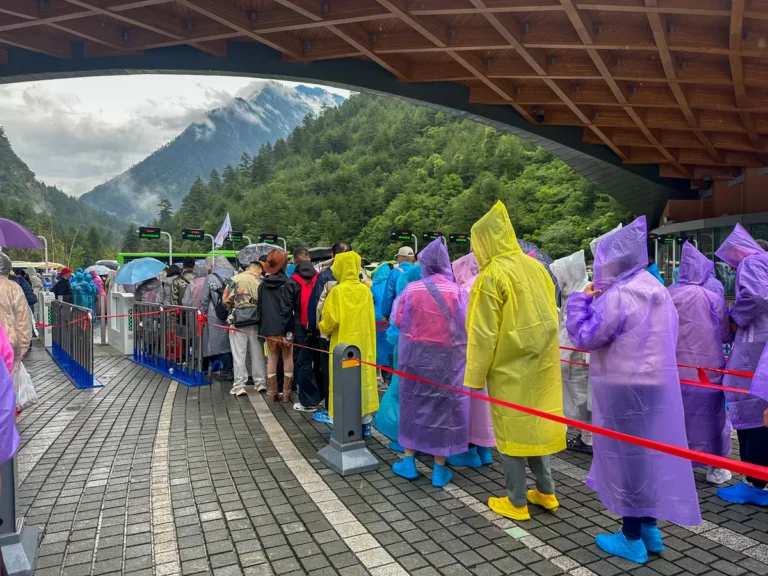
🎉 2026 limited-time promotion: Entrance is completely free from August 1 to October 31, 2026. You still need to reserve online in advance with real-name registration — through the “稻城亚丁” WeChat mini-program or an OTA platform — and scan your ID (passport for foreign visitors) to get in. Daily capacity is capped at 15,000 visitors, so bookings can fill up fast during peak periods.
Reports suggest the in-park sightseeing bus is also free starting August 1, though that appears to be a trial policy without a confirmed end date. Since the whole free-admission window is a 2026 promotion running through October 31, standard pricing (below) will likely return after that.
| Item | Standard rate |
|---|---|
| Entrance (peak season, Apr 15–Nov 19) | ¥146 |
| Entrance (off-season, Nov 20–Apr 14) | ¥120 |
| Sightseeing bus (in-park shuttle) | ¥120 |
| Opening hours | 7:00am–6:30pm (last entry 4:00pm) |
Prices and promotions shift, so confirm current rates before you book.
Altitude — Why It Matters
The reserve spans 2,900m to 6,032m in elevation. Even the highest point on the short trail — the Xiannairi viewing platform — sits at 4,080m, which makes altitude sickness a real factor for anyone coming from sea level. (Detailed prep tips: altitude sickness & packing guide — coming soon.)
Do Foreign Travelers Need a Permit?
No. Daocheng Yading is administratively part of Sichuan Province, not the Tibet Autonomous Region, so you can visit freely with just a passport — no Tibet Travel Permit required. The Tibetan-inhabited regions spread across Sichuan, Yunnan, Gansu, and Qinghai (the Kham and Amdo regions) fall outside TAR jurisdiction, which is why the permit rules don’t apply here.
When to Go
Autumn (mid-September through mid-November) is the strongest recommendation, with foliage peaking in late October. Avoid China’s National Day holiday (Oct 1–7) if you can — it draws crowds nationwide. (Full seasonal breakdown: best time to visit guide — coming soon.)
Getting There
Two main approaches: from Chengdu (by flight, or overland via Kangding and Litang), or from Shangri-La on the Yunnan side. Full route comparisons: getting there from Chengdu / getting there from Shangri-La — both coming soon.
Inside the Reserve
A shuttle from the entrance takes you to Chonggu Monastery, where the reserve splits into two main routes: a short route (day-trip friendly, toward Milk Lake and Five-Color Lake) and a long route (multi-day, beyond Luorong Pasture). Detailed breakdowns of both: short route guide / long route guide — both coming soon.
FAQ
Is Daocheng Yading part of Tibet?
Administratively, no — it’s in Sichuan Province, not the Tibet Autonomous Region. Culturally, though, it’s a Tibetan-inhabited area, so you’ll still see Tibetan Buddhist monasteries and traditional dress throughout.
Is one day enough?
Seeing the reserve itself can be done in a day, but getting there from Chengdu or Shangri-La often takes a full day or more on its own — most people plan for 2–3 days minimum. (Full itinerary guide — coming soon.)
Should I worry about altitude sickness?
Given the average elevation runs around 4,000m, yes, it’s a real risk. Preparation and on-the-ground tips: altitude sickness & packing guide — coming soon.